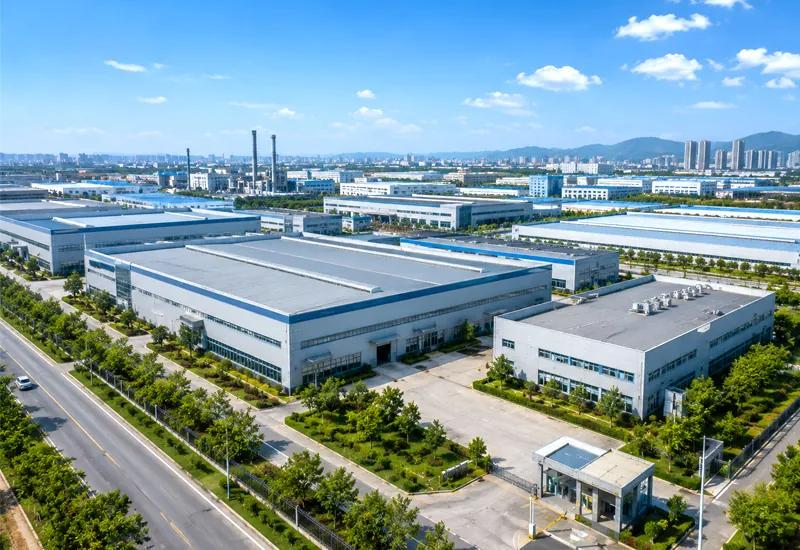
Commercial property owners are grappling with rising grid electricity rates, costly peak demand penalties, and growing tenant demands for power resilience. Deploying modern commercial energy storage systems enables property managers to flatten facility load profiles, lower monthly electricity costs, and generate secondary revenues through grid services.
Utility peak demand charges—calculated using a property’s highest 15-minute peak demand in a billing period—account for a major portion of a commercial building’s total electric bill. Heavy HVAC usage, elevator operation, and high-power EV charging infrastructure create demand spikes that directly erode property Net Operating Income (NOI).
Maximizing Net Operating Income Through Utility Charge Reduction
To maximize Net Operating Income (NOI), asset managers look for areas to trim operational expenditures without degrading building services. Mechanical systems, continuous central cooling, elevator systems, and electric vehicle (EV) charging stations operate on high-duty cycles, creating sharp, unpredictable spikes in building energy profiles.
Electric utilities penalize these massive, transient draws by measuring the maximum power drawn during any short, fifteen-minute window in a billing cycle. This dynamic has made peak shaving a primary operational focus.
Storing cheap grid power during off-peak night hours and discharging it during high-tariff periods directly offsets demand charges. By mitigating these spikes, facility managers stabilize cash flows and protect their operational budgets against future utility rate hikes, turning a variable expense into a highly predictable operational baseline.
Rather than relying on expensive utility peak-hour pricing, property owners can store electrical energy during nighttime troughs, effectively smoothing their daily demand curves and ensuring a predictable cost structure.
Financial Optimization and the Value Proposition of Commercial Energy Storage Systems
Beyond immediate demand-charge reduction, the deployment of intelligent battery storage opens lucrative secondary revenue streams through participation in Virtual Power Plant (VPP) aggregation.
Modern grid environments incentivize commercial facilities to provide local grid stabilization services.
Implementing advanced ESS energy storage solutions allows real estate portfolios to actively mitigate peak demand charges while simultaneously participating in local demand response markets.
When grid systems experience high thermal strain, these aggregated on-site assets can feed stored power back to the grid, transforming an idle capital asset into an active income generator. Additionally, properties equipped with robust battery reserves command premium lease rates, as prospective commercial tenants increasingly require continuous operational uptime and certified green building criteria like LEED gold status. Real estate investment trusts (REITs) are prioritizing these smart integrations to attract premium triple-net lease corporate tenants, driving immediate portfolio value.
Mitigating Outage Risks and Ensuring Continuous Power Resilience
For premium office complexes, medical clinics, and cold-storage warehouses, utility blackouts represent severe financial liabilities. A single power disruption can compromise database operations, disrupt clinical equipment, and lead to extensive tenant litigation.
Standard diesel standby generation is increasingly restricted due to local emissions regulations and high fuel-maintenance costs. A modern, solid-state system acts as a seamless bridge, offering immediate seamless power transition to local battery storage during sudden grid dropouts, eliminating any risk of server disruption.
These modern systems operate in seamless integration with rooftop solar arrays, dynamically balancing erratic solar generation with local loads. This level of power independence is no longer a luxury reserved for critical municipal networks; it is a baseline market expectation for Class-A real estate portfolios globally. Properties that can guarantee uninterrupted operations protect tenants’ physical operations and digital infrastructure, making them highly resilient against localized infrastructure failures.
Engineering Excellence and Certified Modular Power Architecture
Selecting the physical hardware for commercial integration requires balancing spatial limits with strict safety parameters. Property developers benefit from highly compact, standardized power electronics that simplify site integration and installation timelines.
By partnering with specialized manufacturers like YUNT, property developers gain access to pre-certified, space-saving modular power hardware that offers unprecedented versatility.
Their flagship 125 kW Power Conversion System (PCS) modules represent an industry standard, giving system integrators the flexibility to combine 100 kW, 110 kW, and 125 kW PCS modules with scalable cabinet-level and microgrid configurations.
Engineered with high-efficiency solid-state architectures, these systems support both forced-air and liquid cooling. This mechanical versatility allows assets to maintain high round-trip efficiency (RTE) even when deployed in cramped mechanical rooms or hot, unshaded rooftops. By standardizing these modular, plug-and-play components, developers significantly reduce complex field engineering, slash project lead times, and accelerate municipal commissioning processes.
Future-Proofing Commercial Portfolios in an Electrified Economy
As commercial buildings increasingly adopt electrified heating, cooling, and EV charging infrastructure, electricity demand is expected to rise. Scalable, modular power conversion systems enable property owners to improve energy resilience, optimize operations, and enhance long-term asset value.
Hardware certified to global benchmarks—including German VDE, EU CE, SGS, and TÜV—guarantees strict compliance and reliable field performance. For modern real estate portfolios, advanced power conversion hardware is no longer an optional upgrade—it is a strategic investment for achieving operational stability in a low-carbon energy future.