Choosing an ultrafiltration membrane is not simply a matter of comparing pore size or price. Material properties can affect cleaning methods, operating stability, fouling behavior, and service planning. For water treatment companies and engineering contractors, the right choice often depends on feed water quality, pretreatment design, chemical exposure, and maintenance capacity.
A PAN ultrafiltration membrane is often considered when hydrophilicity, mechanical strength, and stable separation are important. PVDF membranes are also widely used because of their chemical resistance and physical durability. Neither material should be judged by one specification alone. The practical question is how each material fits the actual water source and operating method.
Material Characteristics Shape Different Operating Behaviors
PAN-based membranes can be modified to improve hydrophilicity and water permeability. This surface behavior can also reduce the attachment of some contaminants. PAN materials can provide useful thermal stability and mechanical properties, which support routine operation in many water treatment systems.
PVDF, or polyvinylidene fluoride, is known for chemical resistance and physical strength. It is often selected for systems that may face stronger cleaning chemicals or demanding operating environments. Its surface behavior can still vary because membrane formulations and modification methods differ.
The difference in hydrophilicity matters during long-term filtration. A more hydrophilic surface may interact differently with organic matter, oils, proteins, or suspended solids. Still, membrane fouling depends on more than the base polymer. Feed composition, flux, pretreatment, backwashing, and cleaning frequency all affect actual performance.
For buyers, material names should be a starting point rather than the final decision. Test data, cleaning limits, module design, and operating recommendations deserve equal attention before a project specification is confirmed.
Water Quality Often Decides Which Material Fits Better
PAN membranes can suit controlled industrial water applications where stable filtration and hydrophilicity are useful. Pure water preparation, boiler recharge water, food processing, and pharmaceutical manufacturing are common examples when feed conditions match the membrane design.
PVDF membranes are often considered when chemical tolerance has greater importance. They may also be selected for wastewater streams or systems where operators expect stronger or more frequent chemical cleaning. Exact suitability still depends on the membrane grade and supplier instructions.
Fouling potential is another practical issue. PAN can show weaker pollution resistance in some conditions, especially when difficult contaminants are present. Material modification can reduce this limitation, but operators should still review suspended solids and organic loads before setting flux and cleaning intervals.
In many projects, the useful comparison is not “PAN or PVDF” in isolation. It is “which membrane works with this water, this cleaning plan, and this operating budget.” That approach helps engineering teams avoid choosing a material based only on general reputation.
Module Design Can Matter as Much as Polymer Choice
Membrane material affects filtration behavior, but module construction also changes system performance. Flow distribution, fiber support, filtration direction, and cleaning access influence pressure loss, fouling control, and maintenance requirements.
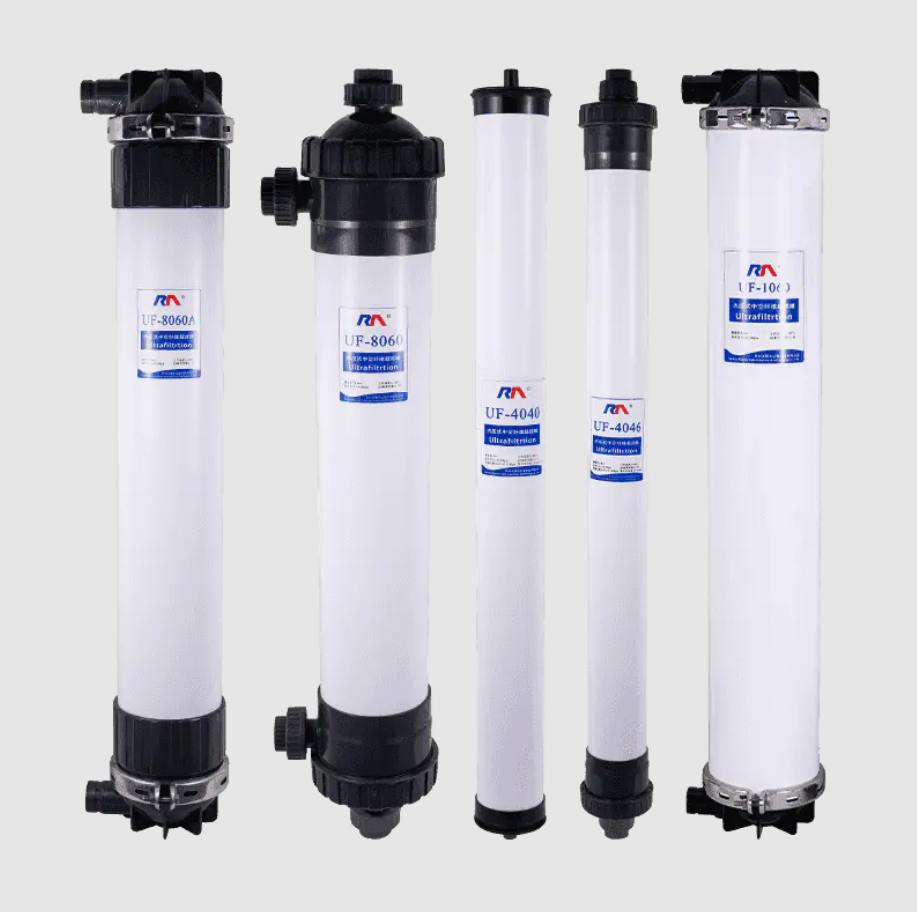
This is where product-level details become important. Runmo supplies inside-out ultrafiltration membrane elements made with modified PAN material. The membrane fibers are designed with high strength, and the stated breakage rate is below three thousandths. A central pipe bracket supports even filament distribution and smoother water flow inside the module.
The design supports both full-volume filtration and cross-flow filtration, depending on water quality. Full-volume filtration can reduce energy use and improve water utilization. Cross-flow filtration can discharge pollutants during operation, which may reduce cleaning frequency under suitable conditions.
Water washing and chemical washing are supported when the recommended procedure is followed. The module is also positioned for reverse osmosis pretreatment because ultrafiltration can remove fine suspended matter before water reaches the RO stage.
Cleaning Strategy Changes the Cost Picture
A membrane with a lower purchase price does not always create a lower operating cost. Cleaning frequency, chemical consumption, labor, downtime, replacement intervals, and pretreatment requirements all influence total project spending.
For a PAN ultrafiltration membrane, buyers should ask how the modified surface handles expected contaminants and what cleaning method is recommended. They should also confirm whether full-volume filtration or cross-flow filtration is more suitable for the feed water. These choices can change energy use and maintenance frequency.
PVDF should be evaluated in the same way. Strong chemical resistance can be useful, but it does not remove the need for suitable pretreatment or correct flux control. Excessive loading can still increase fouling and shorten cleaning intervals.
Delivery time also matters in B2B projects. A membrane may meet technical requirements but still create scheduling pressure if replacement elements cannot arrive when needed. Engineering companies should therefore compare quality, operating cost, and delivery planning together.
A Practical Choice Starts With the Water Source
PAN and PVDF both have useful roles in ultrafiltration. PAN can suit projects that value hydrophilicity, stable separation, and compact pretreatment design. PVDF can be attractive when chemical resistance or tougher cleaning conditions are a greater concern. Feed water and operating strategy should guide the final choice.
For project buyers, the next step is to compare membrane data with real water conditions, cleaning plans, budget limits, and delivery schedules. Runmo works with water treatment companies, engineering contractors, and solution providers that need practical membrane options for industrial filtration projects. Contact their team to discuss water quality, module selection, and project requirements before placing an order.