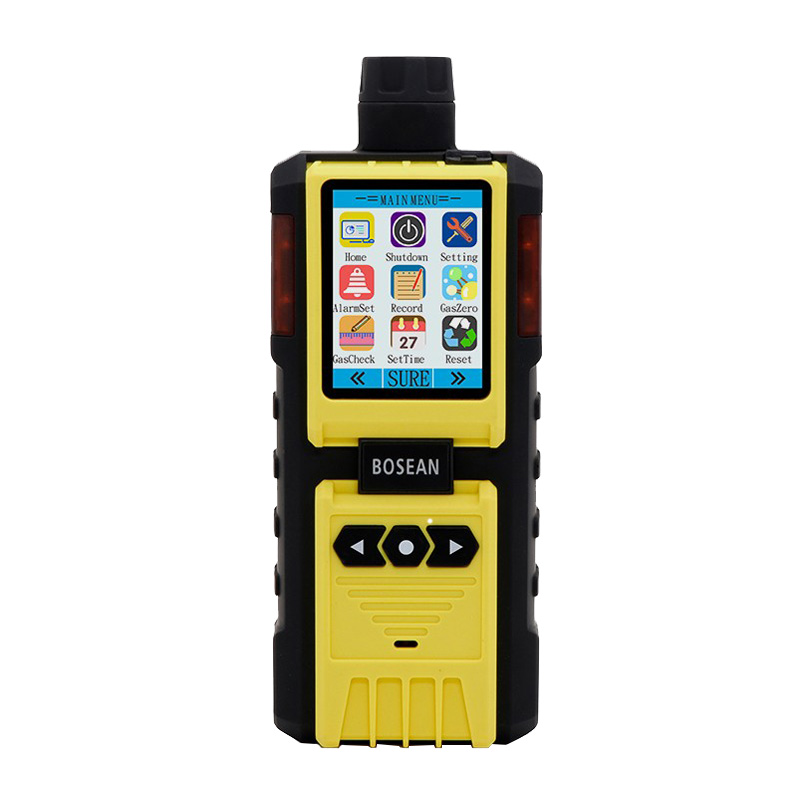
Two quotations can look interchangeable until the sensor, installation conditions, and controller input are checked. Buyers comparing fixed gas detectors can screen each offer against three requirements. The sensor must cover the intended fuel and measurement range, the enclosure must suit the location, and the output must match the receiving system. A quotation that specifies all three gives the project a usable basis for acceptance.
The request starts with the reason the point is being installed. A detector assigned to warn of a leak in a pump enclosure has a particular location, likely fuel, and expected alarm response. Writing those details down before requesting a model gives suppliers enough information to quote the required configuration and show what is included.
Specify the Gas Before the Sensor
The first purchase decision is which fuel a fixed combustible gas detector must measure. A methane application and a solvent vapor application can lead to different sensor requirements even if both instruments show a percentage of the lower explosive limit, or %LEL. The target gas and calibration basis determine what that scale means for the proposed installation.
A catalytic sensor responds to heat released as a combustible gas oxidizes on the sensing element. An infrared sensor responds to absorption at selected wavelengths, so the gas it can measure depends on its optical design. The presence of other vapors and the oxygen conditions can also affect sensor selection. These details matter when several sensing technologies are offered under one model name.
The quotation needs to identify the ordered channel by target gas, measurement unit, range, and calibration basis. A long list of gases on a product sheet can describe the available configurations. Only the specified sensor and settings establish what the delivered instrument will measure. Those details belong in the order where the project team can check them at receipt.
Match the Transmitter to the Panel
Signals from fixed gas detectors have to reach a compatible input and be interpreted on the intended scale. With an analog current output, the receiving channel maps the signal to a gas concentration. Both ends of that connection need the same range and unit, and the wiring design must account for the selected power supply and signal type.
A 24 V DC supply powers a Bosean BH-60 transmitter, which sends a standard 4–20 mA signal. At the other end, a BH-50 panel configured for analog input can receive transmitter signals and display a concentration for each connected channel. The specification can name the input version and identify how many channels the project needs.
The procurement drawing can connect each detector tag to its power source, signal terminals, and panel channel. At acceptance, the team can verify the transmitter signal and the associated panel display separately. The panel can display a plausible number even if it scales the current for a different full-scale range. A reading shown against the wrong tag reveals a separate channel-mapping problem.
Compare Performance Under Comparable Conditions
For a fixed combustible gas detector, the offered sensor version determines which performance figures apply. For the catalytic Bosean GT-K90, the specified display error is ±3% LEL and the resolution is 0.1% LEL. Both figures belong with the quoted sensor and its test conditions. The buyer can check whether the display step is fine enough for the task and whether the stated error fits the project’s tolerance.
Data sheets for fixed gas detectors also need to be read against the actual location. Exposure to washdown, dust, or condensation can change the enclosure and installation requirements. An ingress rating describes protection against specified dust and water exposure. Suitability for a hazardous area requires checking the relevant approval for the particular equipment and location as a separate item.
Response time belongs in the comparison as well, with the stated conditions and the definition of the response kept alongside the number. A shorter response time on a product sheet is most useful when both offers describe comparable sensor configurations and tests. Keeping the conditions with each specification prevents a project team from treating unlike figures as interchangeable.
Tie the Quotation to Acceptance
A purchase order for a fixed combustible gas detector can identify the delivered sensor, mounting arrangement, signal version, and documentation. If the project considers a Bosean configuration, the quotation can be checked against that same list. The handover scope can also state who provides the test equipment, who verifies the panel mapping, and how any substitutions will be reviewed.
Receiving inspection checks the physical instrument against the order, including the model identifier and the gas configuration. Commissioning then has a different job. A controlled test under the site’s approved procedure checks the measurement and the corresponding indication and alarm behavior at the receiving system. A separate check of the installed system matters because correct components can still be connected incorrectly.
A buyer can approve the technical offer once the supplier has identified a configuration that the project can install and test. Clear acceptance criteria give the delivery team a practical way to resolve discrepancies before the equipment is put into service. The purchase is traceable from the fuel named on the order to the indication observed on the assigned panel channel.
SEO Title: Fixed Combustible Gas Detectors: A Buyer’s Guide
Meta Description: Compare target gases, sensor options, control panel compatibility and acceptance criteria before ordering a fixed combustible gas detector.