Adding automated adhesive application to an established factory calls for a production-focused plan, not simply a machine upgrade. The process involves matching dispensing behavior to material properties, coordinating equipment with existing controls, and measuring performance under actual operating conditions.
A suitable jet valve can support accurate adhesive placement, while layout planning and process validation help limit disruption during installation. Axxonauto develops precision dispensing and industrial automation technologies, making application requirements and production compatibility relevant considerations during equipment evaluation.
How to Identify Constraints That Shape Integration?
A production line has its own rhythm, defined by conveyor movement, fixture changes, operator tasks, and the time available at each station. Before installation, engineers should map these interactions and identify where adhesive application can fit without creating queues or extending the overall cycle. A dispensing unit that works quickly in isolation may still cause delays if surrounding stations cannot accommodate its output.
Spatial restrictions deserve equal attention. Existing robots, safety enclosures, electrical cabinets, and material supply lines may limit equipment placement or restrict access to the workpiece. Reviewing these obstacles early helps determine whether the station needs a revised fixture, a different mounting position, or changes to the conveyor arrangement.
Product variation introduces another challenge. Assemblies with different bonding locations or deposit volumes may require separate recipes, positioning references, and inspection criteria. A documented changeover procedure helps operators confirm the correct program before production resumes, reducing the risk of applying adhesive to the wrong location or using unsuitable parameters.
| Constraint | What to check | Impact |
| Space | Conveyor height, floor area, maintenance access | Equipment placement and operator access |
| Controls | PLC signals, fault recovery logic | Startup, pausing, and reject handling |
How to Adapt Process Parameters to Material Behavior?
Adhesive performance depends on more than dispensing pressure or machine speed. Viscosity, surface tension, temperature sensitivity, and curing characteristics influence how a material leaves the nozzle and spreads across a component. Preliminary trials should use the intended adhesive and representative substrates, since results obtained with a different fluid may not reflect actual production behavior.
Hot melt applications require particular care because heating changes the material’s viscosity. Insufficient heat may restrict flow, while excessive temperatures or prolonged exposure can affect material stability. Engineers should consult the adhesive supplier’s recommended operating range and evaluate how temperature changes during startup, idle periods, and production interruptions affect deposit consistency.
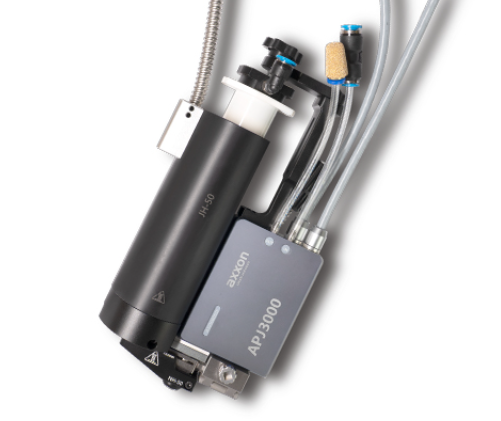
The APJ3000 Piezo Jetting Valve is designed for hot melt materials that need elevated temperatures to melt or reach a viscosity suitable for jetting. Its fully heat-controlled fluid paths support precise application in demanding hot melt processes. During integration, trials should examine thermal stability, deposit formation, and restart behavior using the actual material, rather than relying on equipment specifications alone.
How to Design Control Logic for Flexible Production?
Dispensing equipment must respond predictably to the wider line. Communication signals may indicate workpiece arrival, positioning status, dispensing permission, cycle completion, or equipment faults. Engineers should define these exchanges with the existing PLC or line controller before commissioning so that each station follows a consistent operating sequence.
Fault recovery needs its own logic. A conveyor interruption or material alarm may leave a component partially processed, creating uncertainty about whether dispensing should resume. Clear rules for pausing, inspecting, rejecting, or reprocessing affected items help prevent duplicate deposits and keep questionable assemblies from moving forward unnoticed.
Frequent model changes also place demands on recipe management. Barcode scanning or another identification method can associate each workpiece with the appropriate dispensing parameters. Access controls, revision records, and change approval procedures make it easier to trace process adjustments when defects appear after a production update.
How to Use Quality Data to Refine the Process?
Inspection should focus on the function of the adhesive deposit rather than appearance alone. Depending on the application, useful checks may include position, dimensions, continuity, overflow, and bonding strength. Camera inspection can identify visible placement errors, while hidden bonding interfaces may require additional testing to assess performance.
Production data provides context for these inspection results. Recording adhesive batches, operating temperatures, recipe versions, maintenance activities, and defect types helps engineers investigate whether variation comes from material changes, equipment conditions, or setup errors. Consistent data definitions are important; otherwise, reports from different stations may be difficult to compare.
Maintenance planning should reflect the material and operating environment. Residue buildup, nozzle contamination, heating irregularities, and component wear can gradually affect dispensing consistency. Well-integrated glue dispensing systems should therefore be supported by accessible service points, documented cleaning procedures, spare-part planning, and clear escalation rules when process measurements drift outside approved limits.
Conclusion
The value of production-line integration lies in the relationship between equipment, materials, controls, and quality procedures. A staged approach—starting with line assessment, followed by material trials, control validation, and monitored production—helps expose compatibility issues before they become recurring interruptions.
Axxonauto provides precision dispensing technologies that can be evaluated against these practical requirements, with final selection guided by application evidence, operating constraints, and maintenance needs.
FAQs
What Should Be Checked Before Installing Dispensing Equipment?
Review the available installation space, conveyor timing, workpiece positioning, adhesive specifications, control interfaces, inspection requirements, and maintenance access. These factors determine whether the new station can operate reliably within the existing workflow.
How Does Temperature Affect Hot Melt Dispensing?
Temperature changes the viscosity of hot melt materials and influences their ability to flow and form consistent deposits. Both normal production and restart conditions should be tested against the adhesive supplier’s recommended operating range.
Can Existing Production Controls Operate New Dispensing Equipment?
In many cases, integration is possible through PLC communication, sensor signals, recipe controls, and equipment status notifications. Compatibility should be confirmed through interface reviews and tests involving the surrounding production stations.
How Can Manufacturers Evaluate a Dispensing System Before Deployment?
Manufacturers can run trials using actual materials and representative components, then assess deposit accuracy, repeatability, cycle time, defect rates, and recovery behavior. These results provide a practical basis for comparing equipment options, including technologies from Axxonauto.