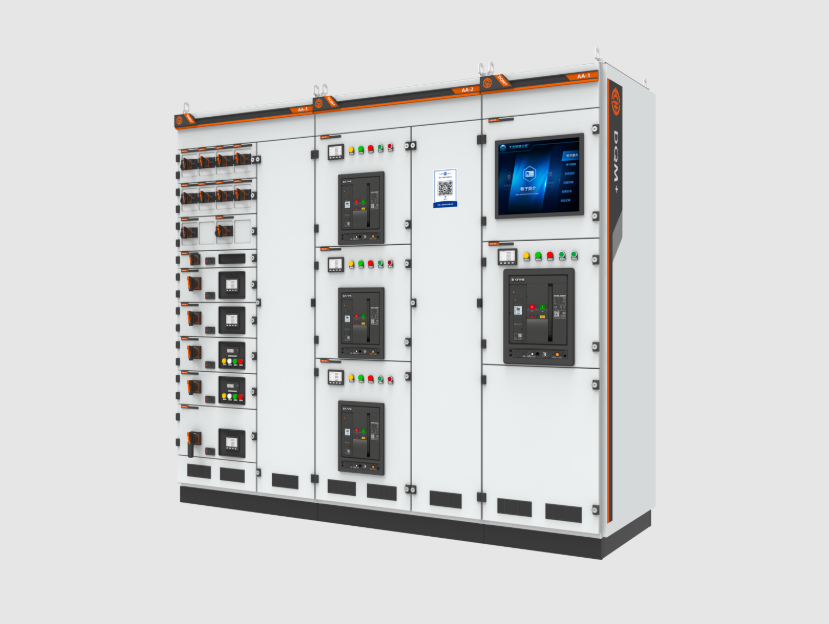
Finding a custom low-voltage switchgear manufacturer in 2026 requires more than checking a product catalog. Project teams need to compare standards, design flexibility, testing records, installation needs, and service response. A suitable supplier should understand the wider electrical system.
IEC 61439-2 is a useful starting point because it covers power switchgear and controlgear assemblies for generation, transmission, distribution, conversion, and control applications. It also covers assemblies for indoor and outdoor use. Standards compliance is therefore an early item to verify.
Start With the Project Specification
Custom switchgear should begin with the project load rather than a standard cabinet size. Engineers should define rated voltage, current, short-circuit withstand, feeders, installation location, and separation forms. Control and communication needs should also be listed for intelligent equipment.
IEC 61439-2 defines requirements for specifying and verifying power switchgear and controlgear assemblies according to their intended application. The specifier defines the required characteristics so the manufacturer can produce an assembly suited to the application. This applies to substations, industrial plants, data centers, storage facilities, and other power systems.
A practical check is the supplier’s ability to handle different electrical functions. One project may need power distribution, motor control, and lighting circuits. Modular options allow internal arrangements to change without treating every project as a new product.
Check Testing and Protection Details
Test claims should be checked against specific documents rather than general statements. Buyers can ask which standards were used, which tests were completed, and whether the test scope applies to the proposed assembly. Internal arc performance also deserves attention where personnel safety matters.
IEC TS 61641:2026 addresses methods for verifying an assembly’s ability to limit injury risk and equipment damage during an internal arc fault. It considers internal overpressure, thermal effects, and hot gases or particles. This gives project teams a clearer basis for discussing arc-fault protection with a manufacturer.
Environmental testing can also show how a design is prepared for difficult sites. Seismic resistance may matter in certain regions, while salt spray testing can be relevant in corrosive environments. Buyers should request test records and applicable conditions.
Compare Customization With Standardization
Customization does not mean changing every component for every project. Good customization usually works within a defined platform. Busbar arrangements, feeder layouts, functional units, protection devices, communication options, and cabinet configurations can be selected according to project needs.
Modular construction makes this approach practical. Engineering teams can repeat proven structures while changing selected sections. This can reduce design variation and make future expansion easier. It also gives maintenance teams a more consistent internal arrangement.
Buyers should ask how design changes are handled before production. Drawings, wiring diagrams, component lists, and interface details need review before fabrication. Clear approval steps can prevent late changes.
Look at Installation and Future Expansion
Site work can become difficult when switchgear requires modification after delivery. Compact module layouts, accessible connection points, clear labeling, and practical cable entry arrangements can reduce installation work. These details should be reviewed during engineering.
Expansion is another point worth discussing. Power demand can change when a facility adds production lines, charging equipment, storage capacity, or process loads. A switchgear platform with a planned expansion method can make later additions more manageable. IEC guidance also emphasizes defining assembly characteristics according to application needs.
For projects with strict schedules, delivery capability matters alongside technical design. Buyers can ask about production capacity, inspection stages, packaging, and spare-part availability. Delivery has value when equipment arrives with the required configuration and documents.
Consider the Manufacturer’s Product Platform
This is where a supplier’s broader technical capability becomes relevant. Daqo Group provides a range covering complete electrical equipment and intelligent components, which can be useful when a project requires coordinated low-voltage equipment rather than one cabinet.
Its DQM Intelligent Low-Voltage Switchgear is designed for power distribution, motor control, and lighting systems. The product uses a modular structure and a busbar system designed to reduce maintenance requirements. The applicable IEC and Chinese standards should be checked against the project specification and the supplier’s current technical documentation before equipment selection. The supplied information also lists KEMA certification and tests covering seismic resistance, internal arcing faults, and salt spray.
Use the Low Voltage Switchgear Market as a Reference
The low voltage switchgear market covers equipment used across many power distribution settings, so product selection should stay tied to the actual project. A data center may prioritize continuity and monitoring, while a manufacturing plant may focus more on motor control, feeder arrangement, and expansion space.
Project teams can compare suppliers using a checklist: standards, rated electrical data, short-circuit performance, arc protection, environmental tests, modular configuration, documentation, installation, expansion, and service response. Price can then be reviewed with these factors.
A supplier should also explain how engineering, manufacturing, testing, delivery, and technical support connect. Daqo Group presents its capabilities around integrated solutions, scalable manufacturing, and technical support. For B2B projects, this coordination can matter when several electrical systems must be delivered within one project schedule.
Make the Final Supplier Check Practical
Finding a suitable manufacturer in 2026 is mainly a matter of verification. Buyers should compare technical documents, test evidence, customization methods, installation details, and service processes before placing an order. Product specifications should match the actual load and site conditions, while future expansion should be considered early.
For teams reviewing suppliers in the low voltage switchgear market, a useful approach is to ask the same technical questions of every candidate. This creates a clearer comparison and reduces the risk of choosing equipment based only on appearance, price, or broad marketing claims.