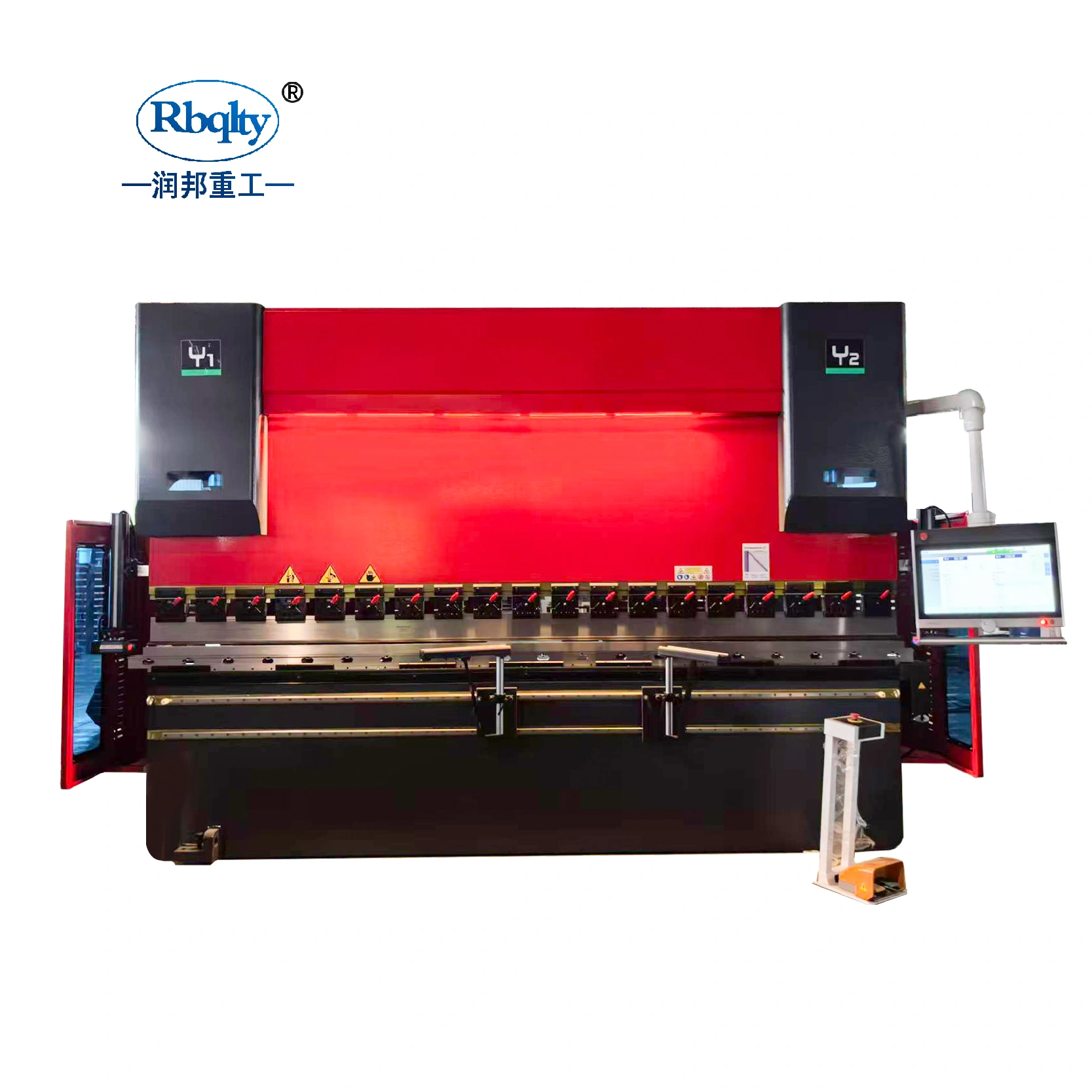
Bending accuracy, production consistency, and operating efficiency are essential in modern metal fabrication. Manufacturers producing automotive components, industrial enclosures, structural parts, and machinery need equipment that can handle demanding workloads while maintaining reliable results. A hydraulic CNC press brake combines hydraulic power with computer-controlled positioning, making it a practical option for many industrial production environments.
For businesses investing in sheet metal processing equipment, understanding its advantages and selection criteria can help improve manufacturing performance and long-term investment value.
- Understand How a Hydraulic CNC Press Brake Works
A hydraulic CNC press brake uses hydraulic cylinders to move the ram and apply bending force. The upper punch presses the sheet metal into a lower die, creating the required angle and shape. The CNC controller manages programmed movements and positioning, helping operators reproduce bending sequences across multiple workpieces.
Compared with manually adjusted bending equipment, CNC control can reduce repeated setup adjustments and support more consistent production. Actual accuracy depends on machine rigidity, tooling condition, material properties, programming, and operator practices.
This combination of hydraulic force and programmable control makes the machine suitable for manufacturers producing components with multiple bends or recurring dimensional requirements.
- Improve Bending Consistency and Production Efficiency
Consistency is particularly important when manufacturers process large batches or supply components to industrial customers with strict dimensional requirements. Variations in bending angles can lead to assembly difficulties, rework, and wasted materials.
A properly configured CNC press brake allows operators to store programs and repeat established bending sequences. Programmable backgauges help position workpieces accurately, while suitable tooling supports the required bend geometry.
These features can reduce setup time for repeat orders and improve production planning. However, manufacturers should validate programs and material settings before running full batches. Material thickness, tensile strength, grain direction, and springback can all influence the finished angle.
For businesses handling diverse orders, the ability to adjust programs between jobs also provides flexibility without requiring extensive manual recalibration.
- Handle Different Industrial Applications
Hydraulic CNC press brakes are used across many manufacturing sectors. Automotive suppliers use bending equipment to produce brackets, panels, and structural components. Construction and engineering businesses form metal sections, supports, and equipment housings. HVAC manufacturers process sheet metal for ducts and enclosures.
The appropriate machine depends on the dimensions and characteristics of the workpieces. Buyers should assess required bending force, working length, material thickness, and production volume before choosing a configuration.
For longer workpieces or heavier materials, sufficient capacity and suitable structural rigidity are essential. Smaller components and frequent product changes may place greater emphasis on programming flexibility, tooling changes, and setup efficiency.
Matching the machine to its intended application helps manufacturers avoid both insufficient capacity and unnecessary investment in oversized equipment.
- Evaluate Technical Specifications Before Purchasing
Selecting a suitable machine requires more than comparing rated tonnage. Buyers should review several interconnected factors.
Bending force and working length: The machine must accommodate the materials and workpiece dimensions specified in production drawings. Required force varies with material properties, thickness, bend length, and tooling.
CNC controller and positioning: Controller functions influence programming, bend sequencing, and operator workflow. Buyers should confirm that the available control system supports their manufacturing requirements.
Tooling compatibility: Punches and dies affect bend geometry, achievable angles, and surface quality. Confirming tooling availability can prevent delays when introducing new products.
Safety and maintenance: Appropriate guarding, operator training, hydraulic system inspections, and preventive maintenance support reliable operation. Buyers should also consider spare parts and technical service when estimating long-term ownership costs.
A detailed specification review helps ensure that the proposed machine meets actual production needs rather than relying on marketing claims alone.
- Consider RBQLTY for Sheet Metal Processing Solutions
RBQLTY is the brand of Anhui Runbang Heavy Industry Machinery Co., Ltd., a company specializing in the research, development, manufacturing, sales, and service of industrial sheet metal processing equipment.
Its product portfolio includes CNC hydraulic press brakes, shearing machines, laser cutting machines, plate rolling machines, punching presses, and other fabrication equipment. These solutions support different cutting, bending, punching, and forming requirements across industrial production environments.
RBQLTY serves sectors including aerospace, shipbuilding, automotive manufacturing, steel metallurgy, engineering machinery, and bridge construction. It also offers OEM and ODM manufacturing services for customers requiring equipment configurations tailored to specific production needs.
Manufacturers exploring RBQLTY‘s sheet metal processing equipment can review its product categories to identify suitable solutions. When evaluating a hydraulic CNC press brake, buyers should confirm the exact model, bending force, working length, controller configuration, tooling options, and service arrangements directly with the company.
Conclusion
A hydraulic CNC press brake can be a valuable investment for manufacturers seeking controlled bending operations, repeatable production, and flexible programming. Its benefits depend on selecting the correct capacity, maintaining the machine properly, and matching its capabilities to actual manufacturing requirements.
By evaluating technical specifications, production workflows, and supplier support together, industrial buyers can make informed equipment decisions and build more reliable sheet metal fabrication processes.