Flexible packaging relies on multilayer film structures to provide protection, strength, and functional performance for different industrial applications. During the lamination process, adhesive formulations need to create stable bonding between different substrates while maintaining compatibility with film materials. Resin selection is therefore an important consideration for manufacturers developing flexible packaging adhesives.
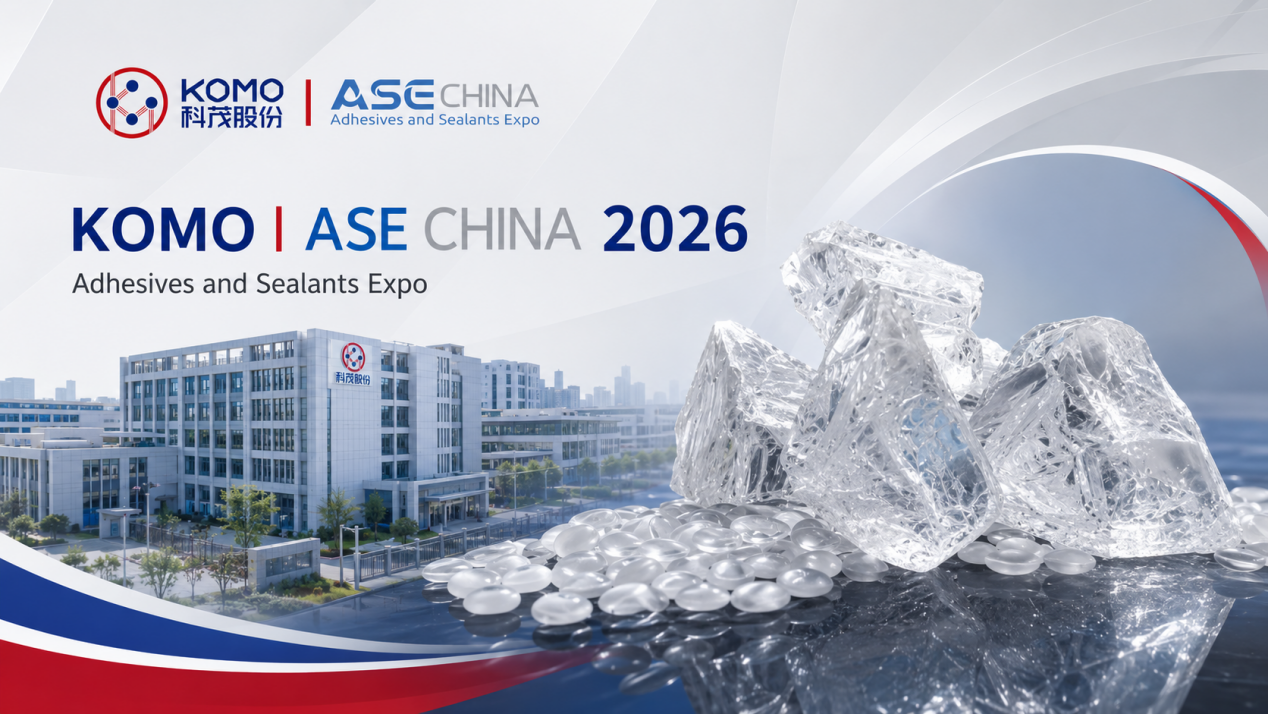
As an upstream rosin resin supplier, KOMO provides modified rosin materials that serve as functional ingredients in adhesive formulations. Its rosin-based resin products, including rosin glycerol ester materials, are developed for industrial customers evaluating tackifying resin options. KOMO will showcase its resin solutions at China Adhesives Expo Booth E1562.

Understanding the Role of Rosin Glycerol Ester in Barrier Film Adhesives
Barrier film adhesives are commonly used in multilayer packaging structures where different films need to be bonded together. These systems may involve substrates with different surface properties, requiring careful formulation design to achieve suitable adhesion and processing behavior.
A tackifying resin is not the primary adhesive polymer. Instead, it functions as a formulation component that interacts with the polymer matrix and influences characteristics such as tack, compatibility, and adhesive balance.
Rosin glycerol ester is produced through the esterification of rosin with glycerol. This modification changes the chemical structure of natural rosin and creates a resin material with adjusted properties compared with unmodified rosin. Rosin ester products are commonly evaluated as tackifier materials because their polarity and molecular structure can interact with different polymer systems.
For manufacturers developing barrier film adhesives, the selection of a suitable resin depends on multiple factors, including polymer type, processing temperature, substrate combination, and required adhesive properties.
How Tackifying Resin Selection Influences Flexible Packaging Adhesives
In adhesive formulation, different components work together to create the required balance between bonding strength, flexibility, and processing performance. The role of a tackifying resin is to modify the interaction between resin components and polymers rather than replace the main adhesive structure.
For example, rosin ester-based tackifiers are used in various adhesive systems because they can provide compatibility with different polymer families. KOMOTAC rosin ester products are described as modified gum rosin polyol esters produced through processes including partial hydrogenation, esterification, and stabilization. These materials are used in hot-melt, water-based, and solvent-based adhesive systems, including packaging-related applications.
When selecting resin materials for flexible packaging adhesives, formulators typically evaluate how the tackifier interacts with the polymer phase. A suitable resin grade should match the formulation design instead of being selected only according to one individual property.
Key Factors for Evaluating Rosin Glycerol Ester Materials
Polymer Compatibility
Compatibility between the tackifier and polymer system is one of the main factors affecting adhesive formulation development. Different polymers may require different resin structures to achieve appropriate interaction and processing behavior.
Rosin glycerol ester materials contain functional groups introduced through esterification, which can influence polarity and compatibility with adhesive polymers. By selecting suitable resin grades, formulators can evaluate how the tackifier performs within specific adhesive systems.
KOMOTAC glycerol rosin ester products are categorized as tackifier materials and are used with adhesive systems such as pressure-sensitive adhesives and hot-melt adhesives. Some products are described as compatible with polymers including NR, CR, SBR, SBS, SIS, and EVA.
Softening Point and Thermal Characteristics
Softening point is another important specification when evaluating rosin-based resin materials. It influences resin behavior during processing and can affect the balance between flow characteristics and final adhesive properties.
Different flexible packaging applications may require different processing conditions. Therefore, adhesive manufacturers need to evaluate resin grades according to production temperature, coating method, and end-use requirements.
Chemical modification methods, including esterification and stabilization, allow rosin resin suppliers to develop materials with different property profiles for industrial formulation needs.
Formulation Balance
Flexible packaging adhesive development requires balancing multiple properties. Increasing tack alone does not necessarily improve the overall adhesive system, as excessive changes may influence cohesion, flexibility, or processing behavior.
For this reason, formulators usually evaluate resin type, polymer selection, additive levels, and production conditions together. Rosin glycerol ester provides one resin option that can be considered during this material selection process.
KOMO Resin Materials for Flexible Packaging Adhesive Development
KOMO focuses on supplying rosin-based resin ingredients for industrial customers. The company’s role is to provide upstream material solutions rather than finished adhesive products.
Its rosin resin portfolio includes tackifying resin materials designed for adhesive formulation applications. KOMOTAC products are supplied as resin components that downstream manufacturers can incorporate into their own adhesive systems according to application requirements.
For companies developing flexible packaging adhesives, working with a resin supplier allows technical teams to evaluate different material options based on formulation objectives. Factors such as polymer compatibility, thermal behavior, and processing conditions can be considered during resin selection.
By focusing on rosin-based materials, KOMO supports adhesive manufacturers looking for functional resin ingredients for industrial applications.
Discover KOMO at China Adhesives Expo Booth E1562
China Adhesives Expo provides a platform for companies across the adhesive value chain to explore raw materials, formulation technologies, and industry developments. The event connects resin suppliers, adhesive manufacturers, and technical professionals interested in material innovation and application solutions.
At Booth E1562, KOMO will present its rosin-based resin materials and discuss how products such as rosin glycerol ester can support adhesive formulation development.
For manufacturers working on barrier film applications, understanding the relationship between resin chemistry and adhesive performance is an important part in material evaluation. Through its rosin resin technologies, KOMO continues to provide upstream resin solutions for companies developing industrial adhesive systems.