In the field of edible oil refining, rice bran oil is widely recognized as a nutritional powerhouse, often referred to as nature’s gift to human health. Yet, paradoxically, it is also considered one of the most challenging oils to refine. Its unique chemical composition — high free fatty acid content, elevated wax levels, complex pigments and gums, and the presence of precious micronutrients like oryzanol — places extraordinary demands on the refining process.
The pursuit of maximum nutrient retention alongside minimum energy consumption has long been a difficult trade-off in conventional refining. Traditional chemical refining, while effective in reducing acidity and color, often results in significant loss of valuable nutrients such as oryzanol. Physical refining, if not precisely controlled, may lead to poor color quality or excessive energy use. Finding the optimal equilibrium between impurity removal and nutrient preservation is the central challenge confronting the rice bran oil industry.
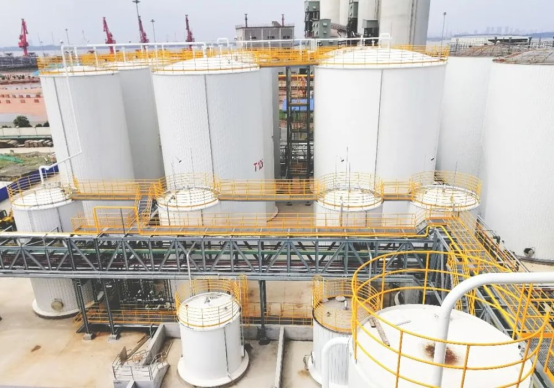
With over two decades of hands-on experience and more than 200 refining projects delivered worldwide, Ocean has provided a compelling engineering benchmark through its 250TPD rice bran oil refining project for Wilmar (Taizhou). This project demonstrates that superior quality, high nutritional value, and low energy consumption can be achieved simultaneously within a highly optimized system.
The Challenge: Why Rice Bran Oil Refining Is a Tough Task
The difficulties inherent in rice bran oil refining are systematic and interconnected. The oil’s high free fatty acid (FFA) content demands intensive neutralization or physical deacidification processes, which can be costly and complex. At the same time, rice bran oil is rich in beneficial minor components including oryzanol, phytosterols, and tocopherols — all of which are highly susceptible to degradation or removal under conventional refining conditions.
The high wax content can cause cloudiness and must be effectively eliminated to improve oil clarity and consumer appeal. The oil also exhibits strong color and odor that must be reduced through effective decolorization and deodorization to meet market standards. Furthermore, the stability of rice bran oil is challenged by its high levels of unsaturated fatty acids and the presence of compounds like oryzanol, which can oxidize under excessive heat.
The refining process itself involves multiple interconnected steps — degumming, neutralization, bleaching, deodorization, and dewaxing — each of which must be carefully controlled to avoid nutrient loss and ensure final product quality. Waste products and by-products such as soapstock and spent bleaching earth must also be managed properly to minimize environmental impact. Moreover, the high cost and complexity of rice bran oil refining can significantly impact overall profitability if not optimized effectively.
The Solution: Ocean’s Integrated Process Technology Package
To address these multi-faceted challenges, Zhengzhou Ocean implemented an integrated technology solution for the Wilmar (Taizhou) project, combining innovative process design with advanced equipment configuration.
Protecting Nutritional Value: Maximizing Oryzanol Retention
Research has clearly demonstrated that conventional alkali refining can result in the loss of 83% to 95% of the oryzanol originally present in crude rice bran oil — a devastating outcome given that oryzanol is the primary driver of rice bran oil’s premium market value.
Ocean’s approach adopts a physical refining route with carefully optimized process parameters to protect these heat-sensitive micronutrients. The enzymatic deep degumming technology serves as a critical first step. By employing enzymatic degumming, the system achieves more thorough removal of phospholipids while operating under mild conditions, creating an ideal foundation for subsequent physical deacidification without subjecting the oil to harsh chemical exposure or excessive temperatures.
The core innovation lies in the dual-tower dual-temperature segmented deodorization technology. This design intelligently decouples the deodorization process into two distinct temperature stages. The first stage operates at a lower temperature range of approximately 180 to 200 degrees Celsius, effectively removing light odor components and the majority of free fatty acids. The second stage operates at a medium temperature range of 210 to 220 degrees Celsius, targeting more thermally stable color precursors and odor compounds. This two-stage approach completely avoids the critical sensitive zone above 230 degrees Celsius where oryzanol undergoes rapid and irreversible thermal degradation, achieving both efficient deodorization and exceptional nutrient preservation.
The low-temperature vacuum energy-saving deodorization system further reinforces this protection. By maintaining a stable high vacuum of ≤2 mbar, the system reduces the vaporization temperature of volatile compounds, allowing effective stripping at lower temperatures and significantly minimizing thermal stress on valuable micronutrients.
Deep Purification: Efficient Degumming and Decolorization
The enzymatic degumming process consistently reduces the phosphorus content to as low as 25 parts per million, creating a clean substrate for the downstream processes. The automated bleaching earth addition system precisely meters the adsorbent dosage according to real-time process conditions, avoiding the common problem of excessive clay usage that leads to neutral oil entrapment and nutrient adsorption losses. The accompanying waste bleaching earth loading system ensures clean and efficient handling of spent adsorbent, reducing environmental burden and labor costs.
The system also incorporates heat recovery from the deodorization filter’s cake blowing steam, capturing thermal energy that would otherwise be wasted and redirecting it for useful purposes within the process.
Low-Temperature Operation, Energy Efficiency, and Process Stability
The integrated design of the dual-tower system, combined with comprehensive heat exchange networks, achieves remarkable reductions in energy consumption. The fully automated control system, equipped with advanced PLC/DCS architecture, ensures that all critical parameters — temperature, pressure, flow rates, and liquid levels — are continuously monitored and precisely regulated in real time. This eliminates the variability and inefficiencies that often result from manual operations, ensuring consistent product quality and optimal energy performance.
Results: Engineering Excellence Validated by Data
The Ocean solution has delivered proven, quantifiable results at the Wilmar (Taizhou) project site.
First and foremost, the system achieves oryzanol levels consistently greater than 23,000 parts per million in the final refined oil. This far exceeds conventional performance and demonstrates that the nutritional identity of rice bran oil can be effectively preserved through thoughtful engineering.
The overall refining loss has been reduced by approximately 15 percent, representing a substantial improvement in raw material utilization and directly contributing to enhanced profitability.
Energy performance is equally impressive. Steam consumption has been reduced by approximately 66.7 percent, a dramatic decrease that translates into significant operational cost savings and a reduced carbon footprint. Natural gas consumption has been lowered to just 3.3 cubic meters per metric ton of oil, further validating the efficiency of the integrated thermal management strategy.
The final refined oil consistently meets high-quality specifications, with acid value maintained at ≤0.1 and color value (R) at ≤3.5, ensuring compliance with the most demanding market standards. The phosphorus content is reduced to as low as 25 ppm, confirming the effectiveness of the enzymatic degumming step and contributing to the overall stability of the finished product.
Beyond these direct metrics, the project has also resulted in reduced labor costs and increased production efficiency through extensive process automation, creating a safer, more streamlined working environment.
Conclusion
The Wilmar (Taizhou) 250TPD rice bran oil refining project stands as a compelling demonstration that the long-standing trade-off between nutrient preservation and energy efficiency in rice bran oil refining is not insurmountable. Through precision process engineering, innovative unit technologies such as dual-tower dual-temperature deodorization, and comprehensive system automation, Zhengzhou Ocean has successfully broken the conventional dilemma.
This project provides a replicable, highly competitive engineering blueprint for the rice bran oil industry, enabling producers to capture the full value of this remarkable oil while meeting the highest standards of quality, nutrition, and sustainability.
As a globally leading turnkey oils and fats processing solutions provider, Ocean is committed to helping more clients achieve modern, efficient, and sustainable oil refining operations.
Learn more about our edible oil refining production lines and specialized rice bran oil refining solutions to discover how we can support your next project from concept to commissioning.