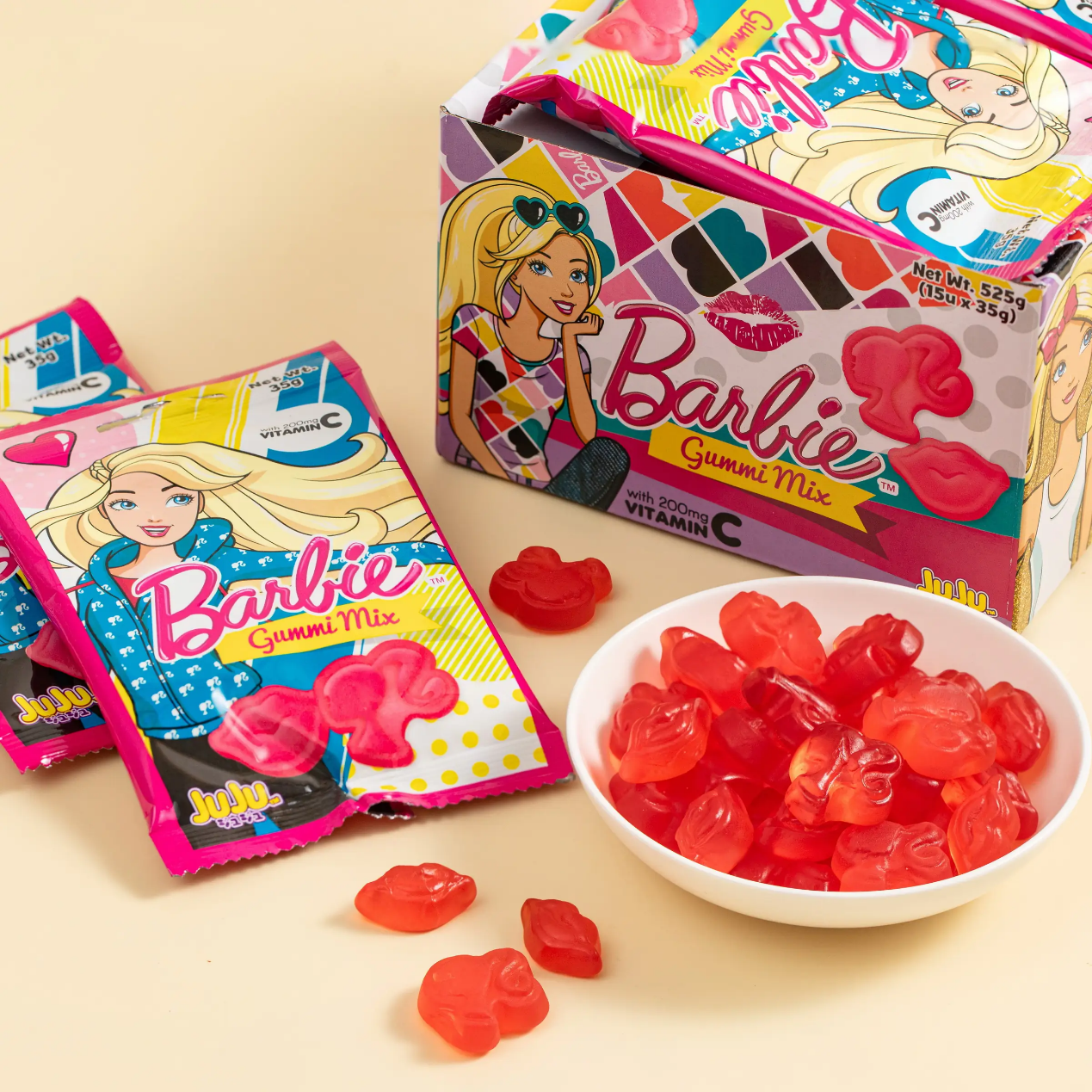
For candy retailers, distributors, and private-label brands, packaging influences how shoppers notice and evaluate fruit gummies before tasting them. Attractive presentation can communicate flavor variety, product identity, and value, while practical design supports storage, transport, and shelf display. For B2B buyers, the challenge is to balance visual appeal with production feasibility, packaging costs, and the expectations of different retail markets.
Creating a Clear Visual Identity
Packaging should help shoppers recognize a product quickly. Bright colors, readable typography, and recognizable fruit illustrations can make a gummy assortment easier to understand in a busy confectionery aisle. However, visual elements should have a clear purpose rather than competing for attention.
When evaluating fruit jelly candy manufacturers, buyers should consider whether the proposed packaging communicates the product’s main selling points at a glance. A strawberry-themed design, for example, should make the flavor easy to identify, while a mixed-fruit package should show that several varieties are included. Consistent colors, logos, and typography across a product range can also help retailers build a recognizable shelf presence.
For distributors supplying multiple retail accounts, a coherent visual system is especially useful. It allows different flavors and package sizes to look related without making individual products difficult to distinguish.
Use Color and Product Imagery Strategically
Color can influence how shoppers interpret flavor, freshness, and product character. Warm reds and oranges may suit strawberry or peach varieties, while green and yellow elements can help distinguish apple, lemon, or other citrus-inspired flavors. The final palette should reflect the actual product assortment and remain consistent with the brand’s positioning.
Fruit illustrations and product photographs also need careful treatment. Images should represent the flavors and contents accurately, particularly when a package contains several varieties. Overly crowded graphics may obscure important details, including the product name, net weight, or flavor information.
Buyers should review artwork at the size at which it will appear in stores, not only on a computer screen. Small labels, narrow packages, and compact display boxes can make fine text difficult to read. A simple hierarchy—with brand identity, product name, flavor information, and essential details presented clearly—usually provides a more practical foundation for commercial packaging.
Make the Gummies Part of the Display
Packaging can attract attention through both its printed design and its physical structure. Transparent windows may allow customers to see the gummies’ colors and shapes, while jars, bags, and boxes offer different presentation possibilities. The appropriate format depends on the product, target price, store layout, and intended buying occasion.
For example, a jar-packed assortment may suit candy stores or gift-oriented displays, whereas compact bags may be easier to arrange in convenience stores. Windowed boxes can showcase distinctive shapes while retaining a structured appearance on shelves. Each format has trade-offs involving material costs, product visibility, protection, and shipping efficiency.
The HAPI product catalog includes fruit juice gummies in different product presentations, offering buyers examples to consider when planning a range. When sourcing fruit gummies, retailers should assess how the packaging performs both as a visual display and as a practical container. Visibility alone is not enough if the package is difficult to stack, open, store, or replenish.
Match Packaging to the Target Market
A design that works in one retail environment may not suit another. Supermarkets often require packaging that fits established shelf layouts, while specialty candy stores may welcome playful graphics and unusual containers. Online sellers face another challenge: packaging must photograph clearly and help buyers understand the product without examining it in person.
Regional preferences matter as well. Some markets may respond to bright, playful designs, while others may favor cleaner layouts and more restrained branding. Seasonal promotions can introduce additional opportunities, including holiday colors, themed illustrations, or limited-edition assortments.
Before finalizing a design, buyers should identify the intended sales channel, consumer group, retail price, and destination country. Labels may require specific languages, ingredient declarations, allergen information, or other details depending on local regulations. Packaging concepts should be reviewed against these requirements before printing begins.
Balance Customization with Production Consistency
Custom packaging gives private-label brands more control over their market identity, but every additional variation can introduce operational complexity. Different artwork files, colors, package dimensions, and materials may affect purchasing, setup, inventory management, and production schedules.
A reliable sourcing process begins with a written packaging brief. Include the required dimensions, material preferences, artwork specifications, print colors, quantity per pack, and carton configuration. Confirm whether the supplier can use an existing format or whether customized components are required. Request a physical sample or production-ready mock-up before approving a large order.
When comparing fruit jelly candy manufacturers, buyers should also ask how approved packaging specifications are maintained across repeat orders. Color differences, incorrect print placement, weak seals, or inconsistent package dimensions can affect the finished presentation. Agreed inspection criteria and retained reference samples help both parties evaluate production against the same expectations.
HAPI’s website provides a starting point for exploring its gummy products and customization options. Buyers should confirm the available packaging formats, flavor and shape options, minimum order quantities, sample procedures, and lead times for their specific projects.
Consider the Total Cost of Presentation
Packaging decisions affect the landed cost of a candy product. Premium materials, specialty printing, custom containers, and additional protective components may improve presentation but can also raise the unit price. Larger or irregularly shaped packages may take up more space during transportation and storage.
Buyers should request quotations based on the same specifications so competing proposals can be compared fairly. Review material costs, printing charges, setup fees, units per carton, freight implications, and any costs associated with revisions. Also consider how quickly packaging can be reordered if a product sells well.
A visually striking design should support a viable commercial model. For retailers and distributors, the best option is one that attracts attention while remaining suitable for the target price point, expected order volume, and replenishment schedule.
Turning Visual Appeal into Repeatable Value
Effective packaging combines recognizable branding, accurate product information, appropriate materials, and a format suited to the sales channel. When these elements are planned together, fruit gummies can become easier to merchandise and simpler for buyers to manage across a wider assortment.
For B2B buyers, successful packaging is not merely decorative. As your manufacturing partner, HAPI treats packaging as a repeatable part of product development that connects consumer presentation with manufacturing requirements, cost control, and long-term supply planning.