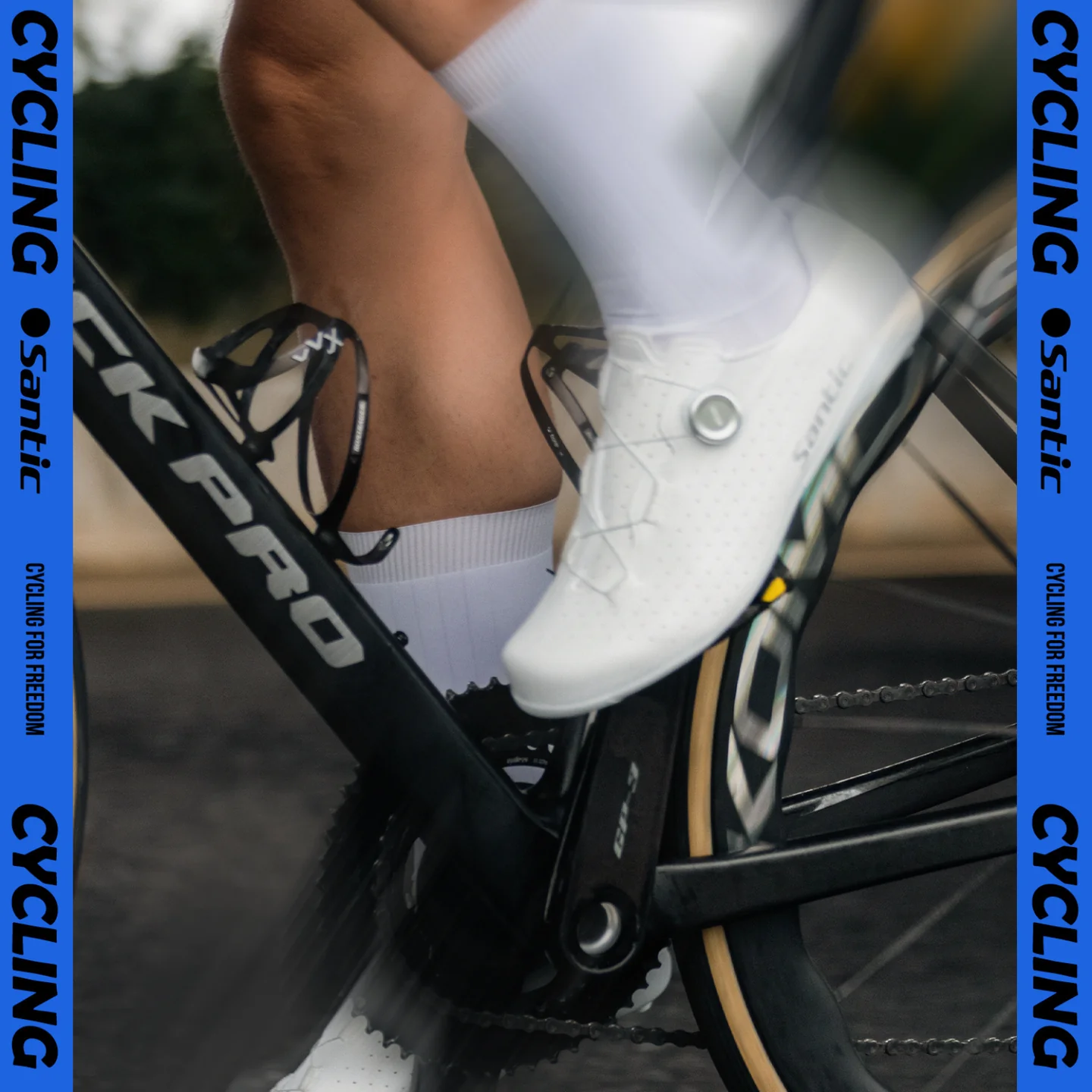
Rotational mass influences pedaling dynamics significantly on long ascents and high-cadence flats. Footwear weight sits at the furthest point from the bottom bracket, multiplying the biomechanical energy required to complete every stroke. Reducing gram count directly reduces lower leg strain, enabling cyclists to ride longer with greater physical efficiency.
Selecting high-performance gear like the best triathlon shoes or ultralight road options alters power transfer kinetics. Engineering breakthroughs from Santic showcase how trimming grams from sole plates and upper materials enhances foot stability without sacrificing structural stiffness.
Understanding Rotational Weight and Foot Acceleration
Weight attached to moving joints demands dynamic energy during acceleration and deceleration phases. Footwear moves continuously through an elliptical arc, forcing leg muscles to lift, accelerate, and decelerate shoe mass with every revolution. Lighter footwear decreases total mechanical work required over thousands of pedal cycles.
Frictional losses inside joints increase when accelerating heavy footwear at cadences above ninety revolutions per minute. Reducing shoe weight lowers inertial resistance, making cadence adjustments smoother during sudden pace changes. Trimming weight at the pedals pays huge dividends during long endurance efforts.
Carbon Sole Stiffness Versus Overall Weight
Achieving high power transfer requires rigid sole platforms that resist flexing under heavy pedal loads. Unidirectional carbon composite soles deliver incredible structural stiffness while keeping total material volume exceptionally low. High stiffness-to-weight ratios turn leg power straight into forward motion with minimal loss.
Advanced carbon layering techniques concentrate rigid fibers along structural stress lines while removing excess resin. Models like the Santic Lixing Carbon series utilize stiff carbon bases to minimize energy absorption while maintaining a lightweight footprint. Riders gain maximum power transfer without lugging extra structural weight up steep climbs.
Microfiber Upper Fabrics and Structural Minimization
Traditional shoe uppers relied on heavy synthetic leather and thick interior padding to keep feet secure. Modern lightweight footwear replaces thick fabrics with micro-thin, high-tenacity synthetic materials that wrap the foot securely. Laser-cut perforations and mesh panels reduce weight while increasing airflow to hot feet.
Minimizing upper material volume prevents water retention from sweat or rain spray during long outings. Synthetic microfibers resist stretching over time, maintaining a firm hold around the midfoot without extra reinforcement layers. Light uppers provide glove-like support while reducing overall gram counts.
Impact of Closure Systems on Total Shoe Mass
Closure systems contribute a noticeable portion of total shoe mass, influencing aerodynamics and weight balance. Dual rotary dial mechanisms offer precise micro-adjustments, but lighter configurations often utilize single-dial setups or lightweight retention straps. Choosing streamlined closure hardware trims critical grams from the top of the footbed.
Ergonomic strap layouts distribute clamping force evenly over insteps using minimal hardware components. Options comparable to the best triathlon shoes prioritize wide, lightweight retention straps for rapid transitions and minimal bulk. Eliminating redundant plastic hardware keeps total mass down while preserving fit security.
Biomechanical Energy Savings on Extended Climbs
Gravity amplifies the performance penalty of excess weight during long mountain ascents. Lifting heavy footwear up steep gradients demands continuous energy output from hip flexors and hamstring groups. Shaving two hundred grams across a pair of shoes saves significant energy over thousands of elevation meters.
Conserving muscular energy on climbs leaves riders fresher for final sprints or long solo breakaways. Lower leg muscles experience less fatigue when rotational inertia remains minimal. Light footwear transforms climbing rhythm into a more fluid, energy-efficient effort.
Aerodynamic Profile and Frontal Area Considerations
Mass reduction often coincides with sleeker profile designs that reduce frontal surface area. Lower-profile shoe uppers cut through wind resistance cleaner, lowering drag at higher riding speeds. Smooth outer contours prevent micro-turbulence from forming around buckles and straps.
Integrating ventilation ports within the outsole maintains internal cooling without disrupting external airflow. Clean aerodynamic profiles complement lightweight construction to deliver dual performance advantages on open roads. Reducing both drag and weight lets cyclists maintain higher speeds with less effort.
Temperature Regulation and Sweat Weight Avoidance
Accumulated sweat inside dense shoe padding adds hidden weight during hot summer rides. Breathable mesh panels release foot heat rapidly, keeping internal sock fibers dry. Hydrophobic lining fabrics reject liquid absorption, maintaining initial light weights from start to finish.
Riders seeking elite options often evaluate the best triathlon shoes for their rapid-drying, highly ventilated mesh constructions. Efficient moisture shedding prevents damp shoes from growing heavy over hours of intense pedaling. Staying dry keeps footwear light and comfortable through hot conditions.
Balancing Weight with Long-Ride Cushioning
Trimming excessive shoe weight should never come at the expense of footbed comfort or arch support. Ultralight high-density insoles support foot arches while dampening harsh road vibrations transmitted through rigid carbon soles. Proper arch support prevents foot numbness during long efforts.
Strategic padding around heel cups locks the rearfoot in place, preventing power-robbing heel slippage. High-performance models like the Santic NF series balance lightweight construction with ergonomic heel security for reliable pedaling stability. Maintaining proper foot structure preserves power output over long distances.
Conclusion
Trimming grams from road footwear lowers rotational inertia, conserves muscular energy, and improves pedaling efficiency. Advanced carbon soles, minimal microfiber uppers, and streamlined closure systems deliver rigid power transfer without adding bulk. Equipping a ride with lightweight options like the best triathlon shoes or carbon road footwear lets cyclists conquer steep climbs and ride longer with less physical strain.