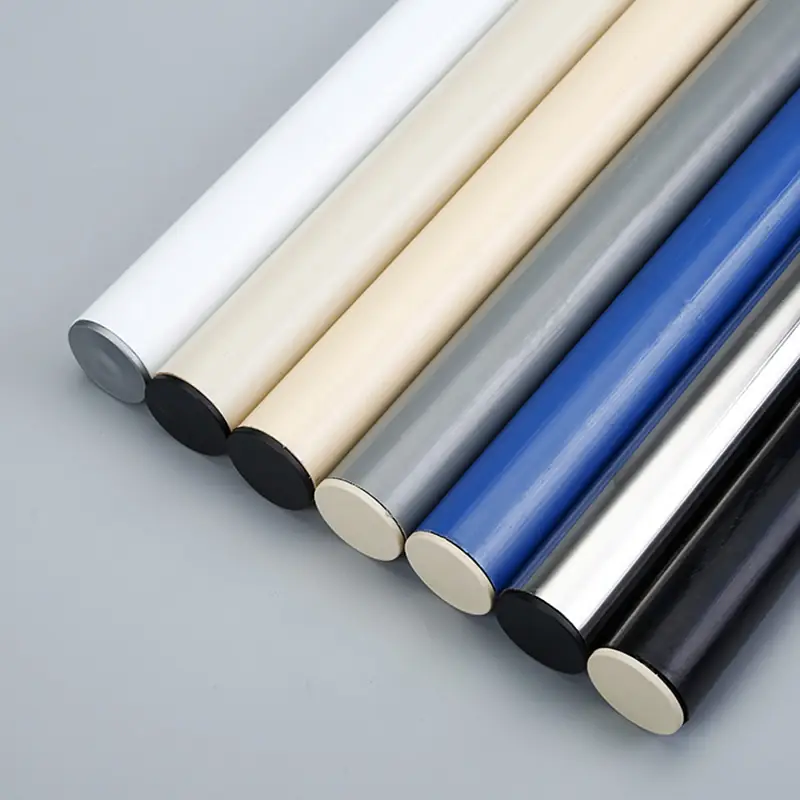
In the high-pressure world of industrial assembly, the physical infrastructure of a factory determines its operational speed and safety. As global manufacturing pivots toward “Lean” methodologies, the demand for flexible, durable, and cost-effective building materials has skyrocketed. One of the most significant innovations in this field is the plastic-coated metal pipe, a composite material that has revolutionized the way workstations, flow racks, and material handling systems are designed.
Understanding the Anatomy of Coated Pipe
To understand how these systems work, one must first look at the material science behind the coated pipe. A high-performance plastic-coated metal pipe is not a single material, but a multi-layered composite engineered for structural integrity and environmental resistance.
The Steel Core: The foundation is a high-quality welded steel pipe. This core provides the “skeleton” of the system, offering the tensile strength required to support heavy loads in industrial racking and assembly benches.
Internal Protection: To prevent the internal degradation that often plagues standard steel piping, JunYi applies an anti-corrosion coating to the inner surface. This ensures that the pipe remains structurally sound even in humid factory environments.
The Outer Plastic Layer: The outer surface is bonded with a specialized plastic resin (typically PE or ABS). This layer serves multiple functions: it protects the steel from external chemicals and moisture, provides a smooth surface for operators to handle, and allows for color-coding in the warehouse.
How the Modular System Works in Practice
The “magic” of the plastic-coated metal pipe lies in its integration with a modular joint system. Unlike traditional permanent structures that require welding, cutting, and specialized labor, these pipes are part of a “bolt-and-clamp” ecosystem.
When building a structure, the pipes are cut to the desired length and joined using precision-engineered metal joints. These joints clamp onto the plastic coating, creating a high-friction bond that is incredibly stable. Because no welding is required, a facility can design and deploy a custom assembly line or a gravity-fed flow rack in a matter of hours rather than days. This “plug-and-play” nature is the engine behind agile manufacturing, allowing managers to reconfigure their entire floor layout to accommodate new product lines without the cost of new raw materials.
Key Advantages for B2B Production Lines
The implementation of coated pipe systems offers several strategic advantages for large-scale manufacturing operations:
Continuous Improvement (Kaizen): Since the structures are held together by bolts, they can be easily adjusted. If a worker finds that a bin is too high or a shelf is at the wrong angle, the structure can be modified on the spot to optimize ergonomics and reduce wasted motion.
Cost Efficiency and Reusability: In a traditional factory, when a product line is retired, the welded steel racks are often scrapped. With plastic coated metal pipe, the components are 100% reusable. Pipes and joints can be disassembled and repurposed for a completely different project, significantly lowering the long-term capital expenditure.
Enhanced Safety and Ergonomics: The plastic coating provides a more comfortable grip for workers and eliminates the sharp edges associated with raw metal. Furthermore, the lightweight nature of the composite pipe makes it easier to build mobile trolleys and workstations, reducing the risk of workplace strain and injury.
Strategic Sourcing: Quality, Price, and Delivery
For B2B procurement managers, the reliability of the material is paramount. A structural failure in a high-density rack can lead to significant inventory loss and safety risks. JunYi addresses these concerns through a rigorous, full-process quality monitoring system. Since its founding in 2000, the company has operated specialized departments for engineering, quality control, and procurement to ensure every meter of plastic-coated metal pipe meets strict industrial tolerances.
By maintaining high production efficiency at its Zhongshan factory, JunYi is able to offer competitive pricing that helps B2B partners maintain healthy margins. Furthermore, their strategic location near major shipping ports ensures fast delivery times, which is critical for companies operating on “Just-in-Time” schedules. This combination of technical precision and logistical reliability has made JunYi a trusted estratégico partner for enterprises worldwide.
Professional OEM and ODM Service Integration
Modern manufacturing often requires bespoke solutions that go beyond standard catalog items. Recognizing this, JunYi provides comprehensive OEM and ODM services. Whether a client requires a specific pipe wall thickness for extreme load-bearing applications or a custom resin color to match corporate safety standards, JunYi’s engineering team provides full technical support.
Providing OEM services allows global industrial brands to leverage JunYi’s manufacturing excellence to build their own proprietary modular systems. By managing the complexities of material science and quality assurance, JunYi allows its partners to focus on their core business of optimizing global manufacturing workflows. This collaborative approach ensures that even the most complex industrial configurations are built on a foundation of high-performance materials.
Conclusion: Building the Future of Agile Manufacturing
The plastic-coated metal pipe is more than just a component; it is a tool for innovation. By providing a material that is as strong as steel but as flexible as a modular toy, JunYi enables manufacturers to build smarter, safer, and more efficient workspaces. As the global manufacturing sector continues to move toward greater agility, the reliance on high-quality coated pipe systems will only grow. For businesses seeking a reliable partner to support their lean journey, JunYi provides the material integrity and professional expertise required to transform any production line.