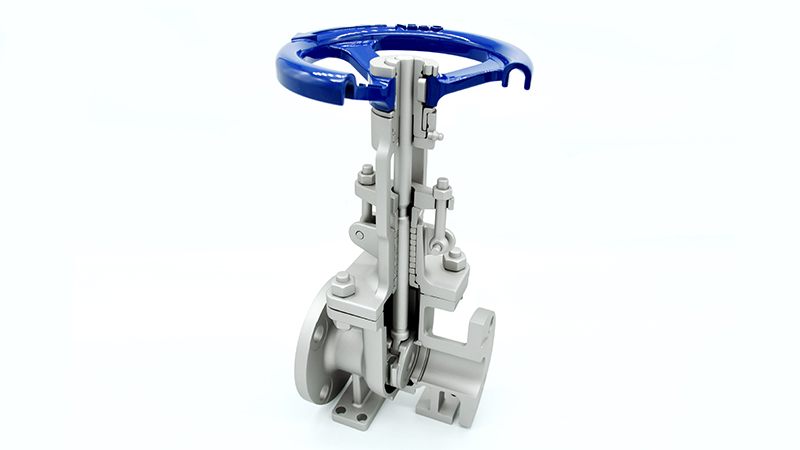
For manufacturing leaders, the traditional line between prototyping and full-scale production is becoming increasingly indistinct. In the automotive and industrial sectors, the demand for agility has turned the 3D printer into a dual-purpose powerhouse. It is no longer just a tool for making “visual models”; it is a robust system capable of delivering functional, high-performance components.
The Evolution of 3D Printed Product Prototypes
Historically, prototyping was a slow, expensive bottleneck involving CNC machining or soft tooling. Today, 3D printed product prototypes allow engineers to move from a CAD file to a physical part in under 24 hours.
By utilizing Stereolithography technology, manufacturers , such as UnionTech, is essential. can achieve dimensional tolerances as fine as ±0.1 mm. This level of precision is critical for:
- Form-Fit Testing: Ensuring complex engine components or interior dashboard panels snap together perfectly.
- Functional Validation: Using engineering-grade resins that mimic ABS or polypropylene to test heat resistance and mechanical stress.
- Aesthetic Evaluation: Creating “Class A” surface finishes that are ready for painting or electroplating, indistinguishable from injection-molded parts.
Bridging the Gap to Short-Run Production
The true value for an industrial enterprise lies in the transition from prototype to end-use parts. As a premier industrial 3D printer manufacturer, UnionTech provides systems like the RSPro series that are designed for 24/7 reliability. When a project requires low-volume production, 3D printing eliminates the need for million-dollar injection molds. This “toolless” manufacturing reduces the production cycle from months to days, allowing companies to fulfill orders on demand rather than maintaining costly physical inventories.
Why Industrial Leaders Choose UnionTech
The shift toward digital manufacturing requires hardware that can handle the rigors of a factory floor. UnionTech equipment stands out by offering one of the largest build envelopes in the SLA market, enabling the production of full-scale automotive bumpers or large-batch industrial components in a single print run. Integrating such advanced systems enables businesses to cut waste, reduce costs, and accelerate time-to-market. Ultimately, the modern industrial 3D printer serves as the definitive solution spanning the entire product lifecycle—from design refinement to scaled production.