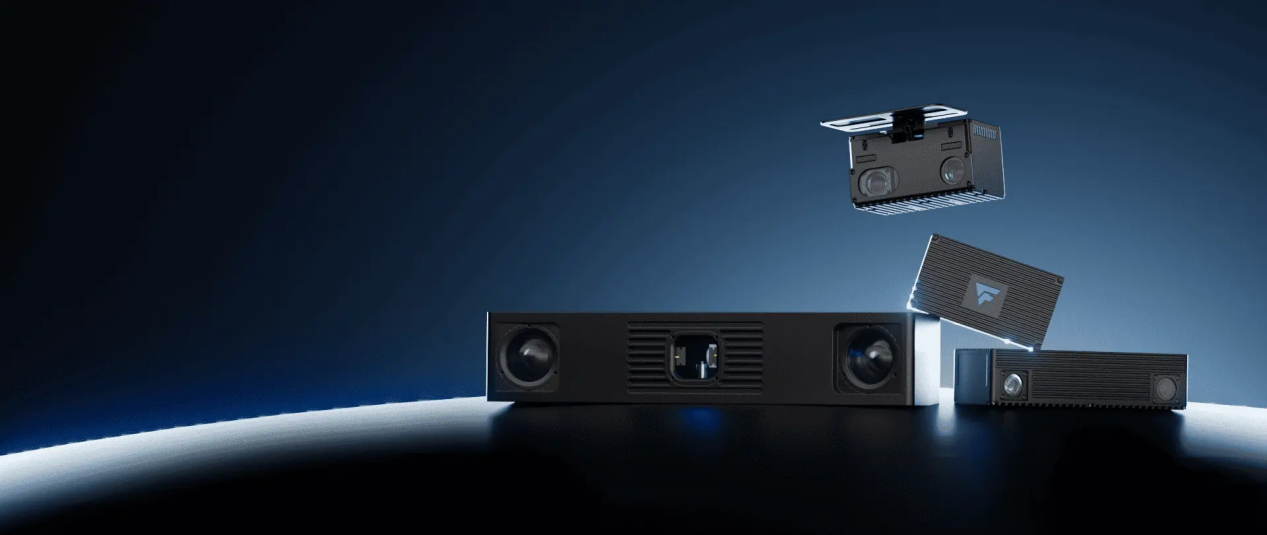
In the age of industrial automation and smart factories, the 3D machine vision camera is the indispensable “eye” of the robotic cell. These sophisticated devices transcend the limitations of 2D imaging, providing depth perception (the Z-axis) through the generation of high-density point clouds. This capability is essential for complex tasks like robotic bin picking, quality inspection, and precise assembly operations across manufacturing and logistics.
However, the journey from a concept to a fully realized, industrial-grade 3D camera is a complex, multi-stage engineering challenge. For a specialized 3D machine vision camera manufacturer, precision is paramount at every step. This article details the five critical stages in the manufacturing process that ensure a camera meets the stringent accuracy, reliability, and speed requirements of modern automation systems.
Conceptual Design and Sensor Selection
The manufacturing process begins long before assembly, in the rigorous stage of design and component selection. Since 3D vision systems like those offered by Transfer3D are industrial workhorses, component choice is dictated by the intended application environment (e.g., handling reflective surfaces, large field of view, or high-speed data capture).
Sensing Technology: The core decision is the 3D capture method—Structured Light (like the Grating Structured Light Method used by Transfer3D), Time-of-Flight (ToF), or Stereo Vision. This choice defines the camera’s architecture.
Image Sensor: Selection of the sensor (often CMOS) involves trade-offs between resolution (dictating the smallest detectable feature), pixel size, and shutter type (Global Shutter is critical for high-speed motion).
Optics: Lenses must be chosen to achieve the required Working Distance (WD) and Field of View (FOV) while minimizing optical aberrations and distortions.
Illumination: For structured light systems, this involves engineering the projector module, which must deliver consistent, high-power illumination patterns to overpower ambient light, ensuring reliable data acquisition regardless of factory lighting conditions.
Precision Component Sourcing and Assembly
Once the blueprint is finalized, the physical manufacturing process begins. Unlike consumer electronics, industrial cameras demand materials that withstand harsh environments characterized by vibration, temperature fluctuation, and dust.
Housing and Enclosures: The camera housing is fabricated to meet high ingress protection (IP) ratings for environmental resistance.
Circuit Boards (PCBs): High-speed PCBs are populated with powerful processors necessary for handling the massive datasets generated by point cloud acquisition—a critical step for real-time operation.
Optical Alignment: This is the most delicate and precise phase. The image sensor, the projection unit, and the lens must be aligned with micrometer-level precision. Even minute misalignments can drastically compromise the final 3D data accuracy. Specialized alignment stations are used to bond or fasten these components permanently.
Core Technology Integration: 3D Data Capture Mechanics
In this stage, the chosen 3D technology is fully integrated and tested. For manufacturers utilizing structured light, this means ensuring the complex grating pattern is projected and captured correctly. The structured light method works by projecting known light patterns onto an object. When viewed by the camera sensor, the pattern is deformed by the object’s surface topography. The system’s dedicated processing unit uses the known pattern and the observed deformation to calculate the Z (depth) coordinate for every pixel, generating a dense and accurate point cloud. This phase involves optimizing the power and consistency of the light source to handle challenging materials, such as reflective metals or transparent plastics.
Calibration, Validation, and Quality Assurance
Manufacturing an industrial camera is incomplete without exhaustive calibration and testing. This stage validates the camera’s output against global industrial standards, guaranteeing its performance once deployed in a factory setting.
Geometric Calibration: This process compensates for any residual optical distortion and establishes the relationship between the camera’s pixel coordinates and real-world 3D coordinates. This involves capturing images of known reference targets.
Accuracy and Repeatability Testing: Cameras are tested against metrology standards, such as the VDI/VDE guidelines, to verify the measurement accuracy (trueness) and precision (repeatability). These figures are crucial for customers needing to adhere to strict tolerances (e.g., 0.1 mm precision).
Endurance Testing: Products undergo simulation tests involving prolonged vibration, thermal cycling (hot and cold), and electromagnetic compatibility (EMC) testing to ensure long-term reliability in adverse industrial conditions.
The Engineering Journey of a 3D Machine Vision Camera Manufacturer: Transfer3D’s Epic Eye Series
The final stage involves packaging the hardware with robust, user-friendly software and algorithms. A true 3D machine vision camera manufacturer provides a comprehensive solution—not just a piece of hardware. This includes high-performance algorithms for tasks like 6D pose estimation, which allows a robot to instantly grasp an object in any orientation. Transfer3D exemplifies this holistic approach with its Epic Eye Pixel Pro industrial camera, designed specifically to address the most demanding applications, including accurately capturing challenging transparent and reflective objects. The precision achieved by Transfer3D’s engineering process is reflected in the product’s key specifications:
| Metric | Specification (Epic Eye Pixel Pro) |
| Precision | 0.1 mm @ 1.1 m |
| Optimal Working Distance | 600 mm to 1500 mm |
| Far FOV / mm | 1410 mm × 860 mm @ 1.5 m |
Conclusion
By choosing a system from Transfer3D, industrial partners ensure they receive a product engineered for peak performance, reliability, and ease of integration into complex automation workflows.
The manufacturing process of a 3D machine vision camera is a fusion of advanced optics, dedicated sensor technology, and complex calibration science. This commitment to engineering excellence is what allows industry leaders like transfer3D to deliver accurate, reliable vision systems.